Overweight
Requiem for a DreamOverweight in Requiem for a Dream is not presented as a neutral medical fact: it becomes the problem through which Sara Goldfarb measures her appearance, her chances of being seen, and the future she believes television will bring. Her wish to lose weight begins as a practical ambition—to fit a cherished dress and appear on a quiz show—but the promise of a changed life makes thinness an increasingly absolute demand. Dieting and prescription pills give that demand a routine, then help carry it toward hunger, stimulant misuse, and psychological collapse.
Identity and Personal Meaning
Sara’s weight matters to her because she connects it to visibility and belonging. A lonely widow in Coney Island, Brooklyn, she hopes to appear on television and imagines that losing weight will let her take part in that public world. The goal is not simply a number on a scale: it is tied to being admired, having something important happen, and wearing Sara Goldfarb’s red dress again. Her son Harry Goldfarb’s bar mitzvah supplies the dress with a remembered past; Sara recalls that Seymour Goldfarb was alive then, and that the family occasion belonged to a happier time.
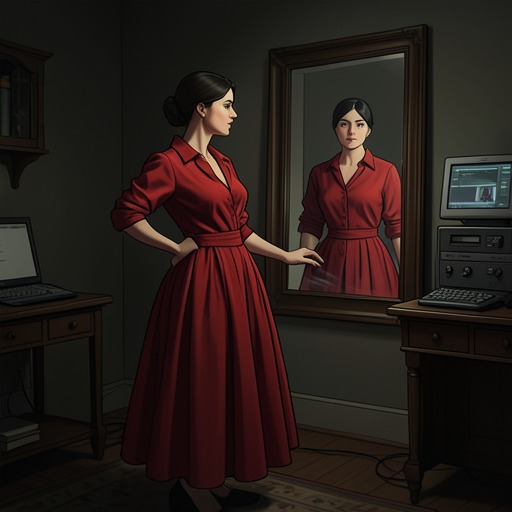
The contrast between the dress as memory and the body as it is now gives the weight-loss project much of its emotional force. Sara loves the dress even when she cannot zip it. Looking at herself through the mirror, she can treat it as evidence that an earlier version of her might still be recovered. Yet the gap between that imagined return and her present body is not resolved by trying on the dress. Instead, it becomes a deadline: if television is coming, her body must change quickly enough for her to appear as she wishes.
Television, Advertising, and the Desired Body
Sara’s expectations are shaped by repeated viewing. With the Television set on, she watches commercials, soap operas, quiz shows, and scenes that supply ready-made pictures of domestic happiness and attractive women. She can surrender meals to keep the set, and her daily tasks take place with her attention still fixed on the screen. Television is therefore more than a pastime: it gives her images through which she interprets what her own life lacks and what weight loss might repair.
The announced television appearance intensifies that influence. Sara immediately worries about her dress, shoes, hair, and how she will look on the set. She thinks of losing thirty pounds before she appears and wonders whether her red dress will show correctly on television. Even as the imagined occasion takes shape, the dress resists her: she manages only to begin zipping it before giving up. She still poses in it and loves how it looks, using the mirror to sustain a vision that her body does not yet match.
Her television fantasy also extends beyond clothing. She imagines herself slim before an audience, receiving applause and perhaps being wanted for a regular show. Later she watches herself answer questions confidently, accept presents, and receive public affection. These imagined scenes make thinness seem like the entrance fee to recognition. The story’s irony lies in the growing distance between that polished screen-life and Sara’s increasingly precarious experience outside it.
Dieting and the Transformation into Treatment
Before Sara receives prescription pills, she seeks a quick route through dieting. She turns to a book, studies its menus, and tries to make a restricted plan serve the urgent purpose of fitting the dress. One breakfast consists of half a grapefruit and black coffee; the instructions also call for at least two quarts of water a day. As she reads further, she finds that the menus remain sparse: an egg is replaced in a later week by a four-ounce broiled meat patty, then by four ounces of broiled fish. The small changes do not make the overall restriction seem manageable to her. She feels hollow and profoundly alone, then reaches for chocolate even as she imagines herself thin on television.
Her efforts to follow the diet reveal how physical hunger and the promise of transformation pull against each other. Sara packs a small amount of lettuce into a measuring cup, drinks water, and tries to believe that her body will soon feed on its own fat. The book’s advice to visualize a desired figure offers a mental image but does not remove her hunger. Her picture of herself in Sara Goldfarb’s red dress, with red hair and gold shoes, remains vivid even when the physical experience of dieting contradicts the fantasy.
A doctor then gives the effort a medical structure. When he tells Sara that she is a little overweight, she responds that she has fifty pounds she would be willing to donate. After examining her, he says she appears to be in good condition, supplies pills and a pamphlet of instructions, and arranges a follow-up appointment. Medicare will cover the bill, easing Sara’s concern about payment. At home, she sorts the purple, red, orange, and green pills into a daily sequence, jokingly treating them as her meals. The prescription turns weight loss from a hoped-for personal project into a repeated regimen overseen by a clinic.
Escalation and Consequences
After two weeks, Sara is accustomed to the pills’ effects. She notices that her teeth grind and her eyes sometimes feel bulgy, but considers these inconveniences worth enduring because she feels good and believes the weight is coming off. At follow-up visits, she is weighed, receives a new supply, and signs Medicare paperwork. The report that she has lost ten pounds in the first week overwhelms her concern about side effects. She trusts the doctor’s reassurance that she is doing well, and the result appears to confirm that the regimen is working.
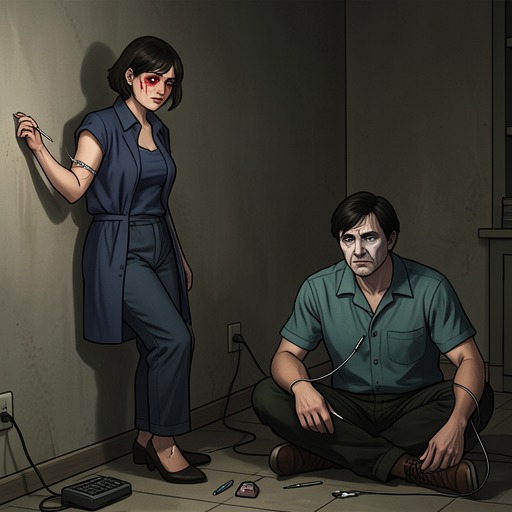
The pursuit nevertheless becomes less about health than about sustaining the promise of thinness and television fame. Sara continues to think of the dress and the appearance she wants, even as her behavior narrows around food, pills, and the set. In the later crisis, she wears the dress and gold shoes constantly, continues to refuse food, and repeats the word she associates with being slim. The flesh hanging from her upper arms exposes the distance between the body she sees in her imagined television appearances and the one physically present. Friends bring food, but her conviction that she must remain thin makes her decline it.
Medical Misreading and Significance
Sara’s condition is ultimately entangled with the way her symptoms are interpreted. After she is admitted in a disoriented state, Dr. Reynolds diagnoses paranoid schizophrenia and recommends possible shock treatment. Dr. Spencer argues that her condition is medical: she has been taking diet pills and Valium and has not eaten a proper meal for many months. He says she should be transferred to medical care, given rest and proper food, and allowed to clear the stimulants and depressants from her body. He cites six patients with similar symptoms whom he treated medically and who recovered in less than a month without shock treatment or psychotropic drugs. His account makes clear that the crisis cannot be understood as a weight problem alone, or as a psychiatric diagnosis detached from the pills and prolonged lack of food.
The arc gives overweight a double meaning. At first, Sara experiences it as an obstacle to the public recognition she longs for; within the logic of her television fantasy, becoming thin promises a new social identity and a new life. As dieting hardens into pill use and food refusal, that promised future becomes a force that helps endanger her. The contrast between the dress she treasures, the changing body she tries to control, and the medical crisis that follows makes the novel’s treatment of weight inseparable from loneliness, media-shaped aspiration, and the risks of turning appearance into the condition for happiness.